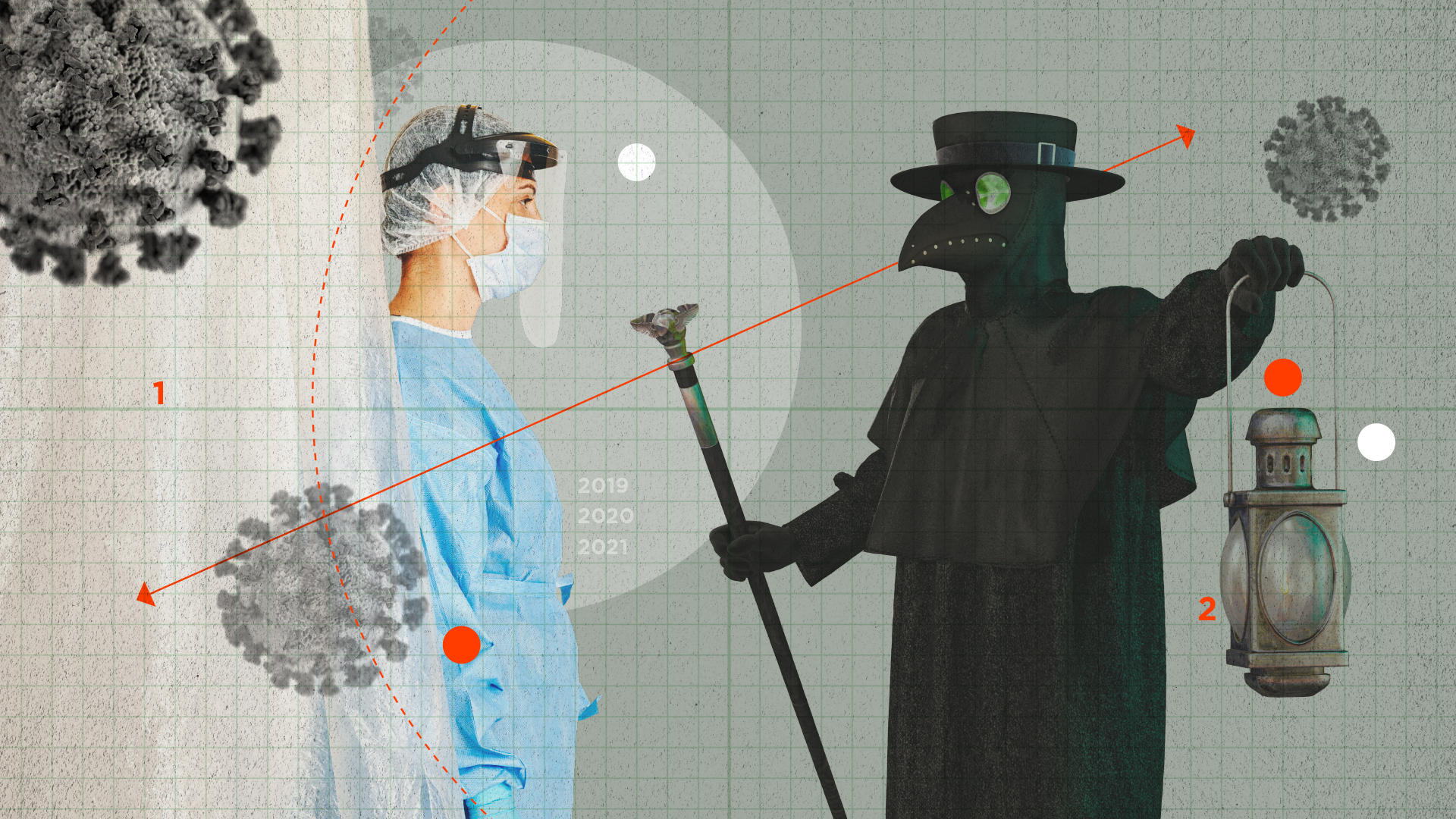
Work-life balance has been the subject of a decades-long debate. But when going to work meant putting our lives at risk, we began to reevaluate how work fits into our lives.
Science and the Bible agree on fundamental aspects of what makes life possible. Uncovering its origin and purpose by scientific means has proven more challenging.
Science and religion each have a range of explanations for how life came to exist on Earth. On the scientific side, can a theory called panspermia upstage its Darwinian counterpart?
Many of the ideas we’ve accepted from a young age are based on flawed thinking or incomplete understanding. In this collection of articles, we look at some of the influential thinkers whose concepts underpin the Western world.
In this installment we follow the story of the patriarchs to its conclusion: Jacob’s final years, Joseph’s life in Egypt, and the birth of the ancient nation of Israel.
Despite recent positive changes in some of the world’s enormous fisheries, problems of overfishing and habitat destruction remain very real threats to marine resources.
Part Three: Concluding our series on the history of the world’s dominant economic system, we look at where capitalism is taking us and ask whether there is a better way.
According to the FBI, identity theft is one of the fastest growing crimes in the United States—it claims more than 10 million victims a year, and this number is expected to rise.
Though considered one of the three “great fathers” of modern psychotherapy, Alfred Adler is less familiar to most people today than Sigmund Freud and Carl Jung.
We’ve all heard about nature vs. nurture. But a third factor also helps determine who we are and what we pass on to our children, and the implications are profound.